Many homeowners in Grand Island, NE wonder why their furnace runs constantly during a January freeze off Capital Avenue, or why their second floor feels very hot in July. Most of the time, the problem is not the HVAC unit. The problem is poor insulation. Over the years running Alpha Siding Co, our team has climbed into hundreds of attics and torn off old siding across Hall County, and we hear the same questions over and over from local homeowners. Alpha Siding Co is here to answer these questions with clear details about insulation in Grand Island, NE.
How do I know if my Grand Island home actually needs more insulation?
Homeowners should look at their energy bills first, but the inspection should not stop there. Go up to your attic on a freezing winter morning. If you see frost on the underside of your roof deck, your warm air is escaping right through your current insulation and condensing up there. Another sign is ice dams forming along your gutters after a heavy snowstorm in Grand Island, NE. Inside the house, if certain rooms are drafty or your walls feel cold to the touch when the wind kicks up from the plains, you are losing conditioned air. We deal with very heavy temperature swings here in central Nebraska, meaning your insulation has to work overtime year round.
What R-value should I be aiming for in Nebraska?
For our specific climate zone, current building recommendations suggest an attic R-value between R-49 and R-60. If you are looking at your attic right now and you can easily see the wooden floor joists sticking up above the pink material, you are well below that standard. Most older homes around town built back in the 1960s and 1970s are sitting at maybe R-19 if they are lucky. Getting that up to spec makes an immediate difference in how hard your furnace and air conditioning system have to hustle to keep your home comfortable in Grand Island, NE.
Is spray foam worth the extra money compared to fiberglass batts?
The choice depends on where you are putting the material and what your budget looks like. Spray foam expands and seals every tiny gap, acting as both an insulation barrier and an air seal. Closed-cell foam also adds structural rigidity and moisture resistance. However, spray foam costs significantly more than traditional fiberglass batts or blown-in cellulose. Alpha Siding Co usually tells homeowners to look at closed-cell spray foam for rim joists in the basement or tricky cathedral ceilings, while blown-in cellulose is often the most cost effective way to beef up a standard attic in Grand Island, NE.
Can you add new insulation right on top of old insulation?
Most of the time, the answer is yes. If you have old blown-in cellulose or fiberglass batts that are not moldy, wet, or ruined by pests, you can layer new material right on top. Blown-in cellulose is great for topping off an attic because it settles into all the irregular spaces and fills the gaps left by older batts. Just make sure nobody covers up soffit vents during the process, because your attic still needs to breathe properly to prevent moisture buildup in Grand Island, NE.
How long does an insulation upgrade take to pay for itself?
Usually, the upgrade pays for itself between 3 to 5 years, depending on how bad your current setup is and what kind of energy source you use. When Alpha Siding Co upgrades a drafty Grand Island house, homeowners almost always notice the change during the very next extreme weather month. Your HVAC system cycles less, your home stays at a steady temperature instead of fluctuating wildly room by room, and that monthly utility bill drops visibly for residents in Grand Island, NE.
Should I insulate my exterior walls when replacing my siding?
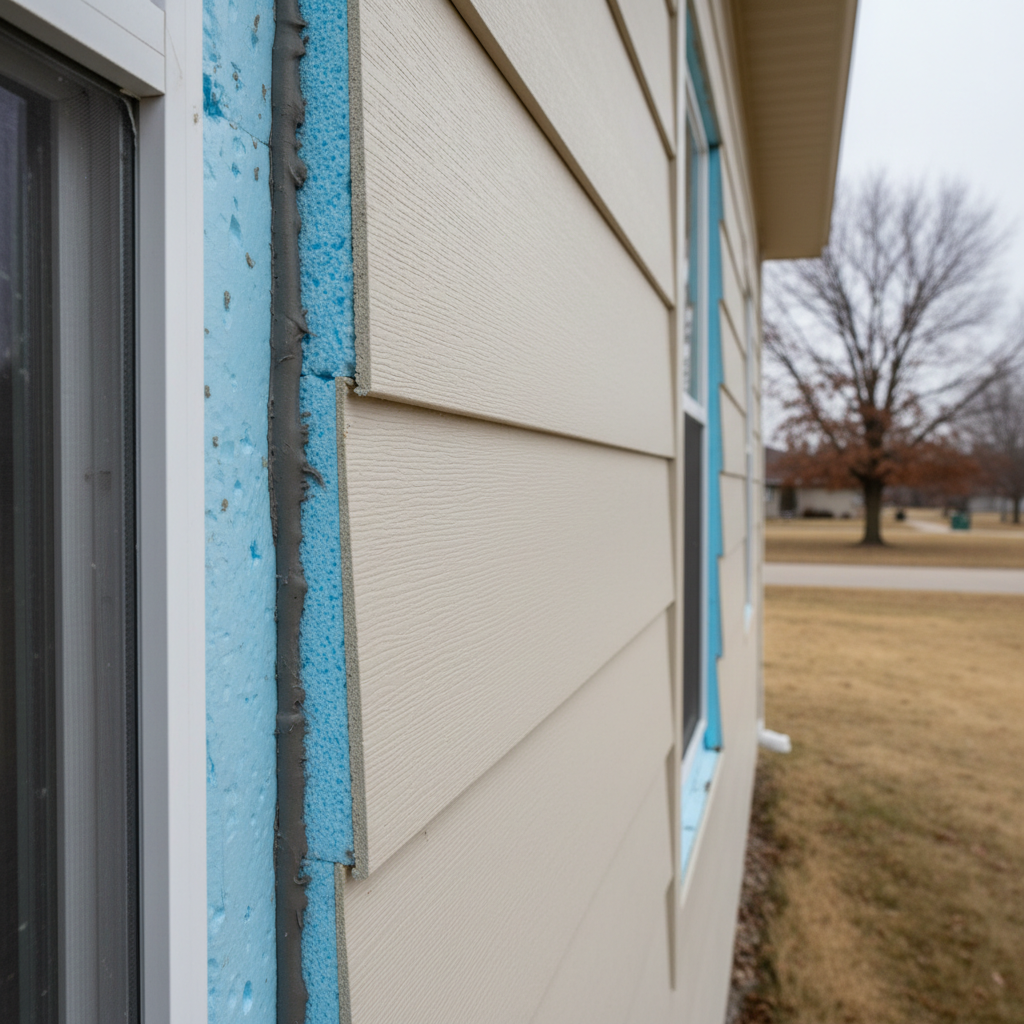
If you are already taking off your old siding, do not skip this step. It is the absolute best time to add continuous rigid foam insulation board to the exterior framing before putting up new panels. Nebraska winds pull heat right through standard wall studs due to thermal bridging. Adding an exterior foam layer breaks that thermal bridge and keeps your whole house significantly tighter against the elements during harsh weather in Grand Island, NE.